AIRPORT READINESS BRIEFING // CONVENIENCE ACCESS, NEVER ABSOLUTE THEFT PREVENTION INDEPENDENT GUIDE — NOT AFFILIATED WITH ANY CARRIER
SLCLOSURE MECHANISMS & INSPECTION REALITIES

ACCESS UNDER CONTROL

A suitcase lock exists to keep latches shut under conveyor-belt shocks, prevent casual opportunistic snooping in hotel luggage rooms, and record whether a bag was opened out of sight. No suitcase lock—electronic or mechanical—prevents a whole bag from being lifted off a carousel, nor can a digital shackle compensate for a weak single-coil zipper. Choosing well means matching the electronic trigger to a sturdy physical closure and a reliable zero-power fallback.

75+ COUNTRIES Screening agencies equipped with Travel Sentry master-key overrides (TSA001–TSA008)
< 0.6 SEC Typical capacitive fingerprint read speed with dry, clean skin
−10 °C TO +50 °C Thermal swing smart-lock micro-cells must endure between tarmac sun and unheated holds
DUAL COIL Minimum puncture-resistant zipper specification worth pairing with an electronic lock
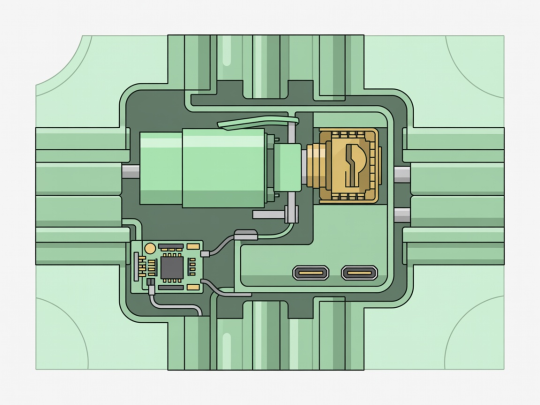
Flat mint and green vector cutaway of a smart suitcase latch showing solenoid cam, TSA override cylinder, and USB-C emergency jump terminals
Well-engineered smart latches isolate the motorised cam from the mechanical TSA keyway so manual screening never strips nylon gears.

THREE ELECTRONIC UNLOCK METHODS COMPARED

1. Capacitive Biometric Fingerprint: Completely independent of your phone battery—ideal when arriving after a twelve-hour flight with a dead handset. However, cold dry winter hands, hand sanitiser residue, or minor scrapes can trigger false rejections. Store at least three fingers from each hand during setup.

2. Passive NFC Tap Cards / Watch Credentials: Uses 13.56 MHz short-range induction (2 cm distance). Immune to wet fingers and harder to trigger accidentally in an overhead bin than Bluetooth proximity unlock. Keep a spare credit-card-sized NFC key in your wallet separate from your phone.

3. Smartphone BLE App Unlock + Tamper Logs: Lets you grant temporary access to a partner and logs timestamped unlock events, including mechanical TSA key turns on select models. Vulnerable to app discontinuation if a startup luggage maker shuts down its cloud login server; insist on offline local Bluetooth pairing or a physical dial/key override.

CLOSURE STRENGTH VS ELECTRONIC COMPLEXITY

SINGLE-COIL ZIPPER + SMART LOCK

Poor match. Standard luggage coil teeth separate easily when punctured and slid apart, then re-close cleanly when the locked sliders are dragged over the gap. Spending extra on biometric electronics over a basic coil zipper buys convenience only.

DOUBLE-COIL ANTI-PUNCTURE ZIPPER

Balanced cabin choice. Dual-layered interlocking teeth (such as YKK RC Fuse or SecureTech Dual-Track designs) resist pen-tip separation while keeping bag weight moderate and permitting slight expansion.

CLAMPED RIGID LATCH FRAME

Strongest pairing. Extruded aluminium frames with twin hook latches eliminate zipper tape altogether. Integrated biometric or NFC actuators release spring-loaded clasps cleanly in one touch.

Failure Scenario Poor Smart-Lock Behaviour Travel-Ready Specification
Internal lock battery drains completely in hold Solenoid releases latch ("fail-unlocked") or traps contents with no override. Mechanically latched ("fail-secure") plus shrouded USB-C external jump power port or physical backup dial/key.
Security officer screens checked bag Electronic bolt fights manual rotation, stripping actuator gears. Decoupled Travel Sentry cylinder that lifts the keeper bar independently of the motor cam, plus mechanical pop-up inspection indicator.
Manufacturer discontinues companion app Account-tethered Bluetooth lock can no longer pair to a new phone. On-device fingerprint enrolment or offline combination wheel that works forever without vendor servers.

SCREENING AND INSURANCE CAVEATS

DO TSA LOCKS INCREASE KEY-DUPLICATION RISK?
Travel Sentry master key shapes (especially TSA007) are publicly known to security researchers, meaning a TSA cylinder is not high-security vault hardware. Still, using a non-TSA padlock on checked bags flying through the US or Canada invites legitimate bolt-cutting during routine explosive-trace screening. Carry high-value electronics, jewellery, medication, and passports in your cabin personal item—never in checked luggage.
ARE INTEGRATED LOCK CELLS ALLOWED IN CHECKED BAGS?
Most integrated biometric locks use a tiny 100–250 mAh Li-Po cell (~0.37 to 0.92 Wh), well below the 2.7 Wh ceiling commonly applied to non-removable lithium cells under IATA DGR provisions. However, if the lock draws power from the suitcase's main 37 Wh USB power bank, that main bank must still be ejected before checking the bag (see Home: Check the Battery First).

NEXT: WHEN LUGGAGE FOLLOWS